The 6 best places to see sloths in Central and South America
The cute face, the doting eyes, the hilariously long time to get from A to B. Sloths are the loveable idiots of the animal world and it seems like their purpose in this world is to make people go awwww.
A lot of folks don’t know this, but sloths actually exist outside**of the internet too. Lazily crawling through the tropical treetops of Central and South America, they’re fast becoming one of the prime reasons that tourists come to this stunning part of the world.
Before we get to the best places to see sloths, though, there are two slight issues with that:
Sloths are *incredibly *hard to spot.
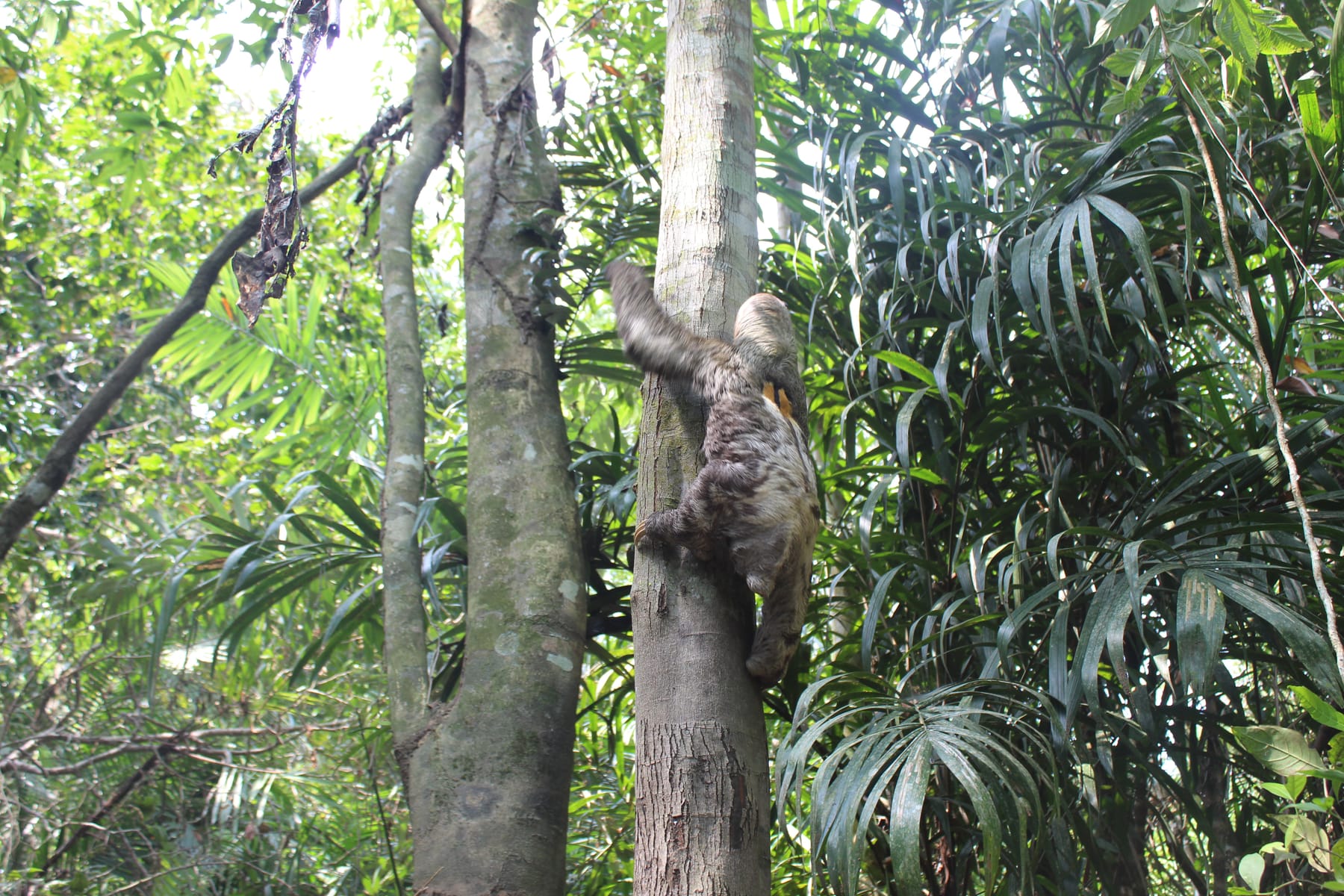
They like to hang out in the very tallest trees of the very densest jungles, and do an Oscar-worthy impression of an inanimate object. Those videos that you see of sloths slowly crossing the road are the exception, not the rule. That’s why they go viral. So wandering around the continent on the assumption that you’ll bump your head on one will only lead to disappointment.
Ethics don’t always come first.
The second issue is a somewhat more sinister one. Animal-based tourism, particularly in second- and third-world countries, can come with a dark side. You can’t always guarantee that a rehabilitation center or sanctuary does what it says on the tin. These places can often be more prison than hospital, with tourists like you filling their dodgy coffers. The same problem shows up when choosing a place to volunteer in Costa Rica, where the tell is whether a program lets you touch the animals.
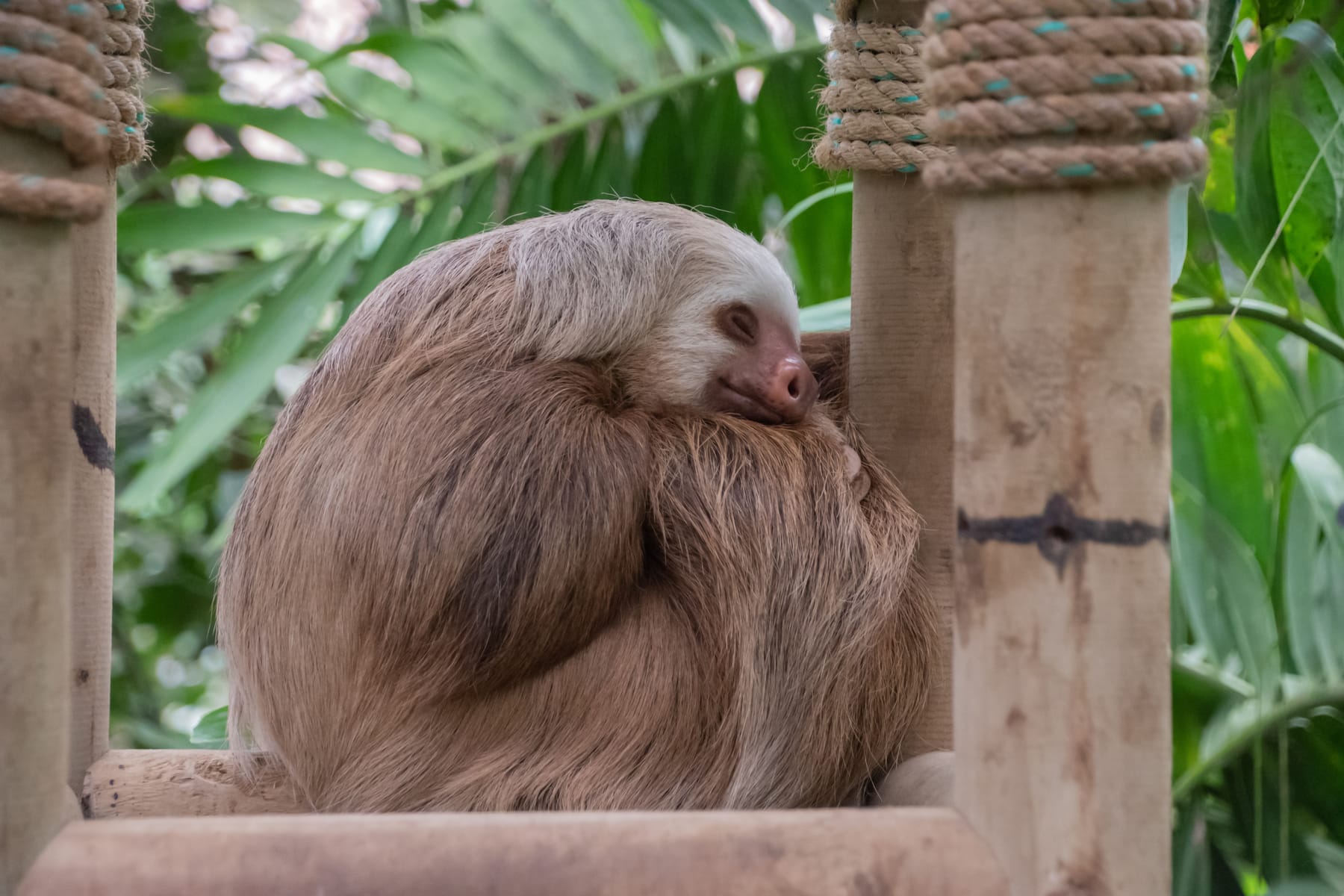
I’ve had the honor of enjoying some particularly close encounters with sloths over the years. I’ve spotted them in their natural habitat, visited them in rehab centers, and even scored a hug off a three day old bundle of cuteness in the Amazon. And while I could claim (perhaps willful) ignorance early on, the older I get, the more careful I am to ensure that I only go sloth hunting when I can guarantee things will be humane.
So, where does one find this ever-elusive darling of the internet and ensure that they aren’t contributing to sloth problems while they do so? Here are the six best places for a sloth lover to get their fix:
How to actually spot a sloth
Before the list, some practical help, because the single biggest reason people come home sloth-less is that they are looking for the wrong thing.
You are not looking for an animal. You are looking for a lump. A sloth at rest is a gray-brown ball wedged in a fork, with no visible head, legs, or face. Scan the canopy for a shape that does not match the branches around it, then watch it for thirty seconds. If it has not moved, that is promising rather than disappointing.
Learn one tree. Sloths feed heavily on cecropia, which is easy to recognize even for beginners: pale trunk, sparse branches, and enormous hand-shaped leaves. Cecropia is relatively open compared with the rest of the canopy, which is exactly why sloths in cecropia are the ones people actually see.
Take the guide. They carry spotting scopes, they know which individual sloth has been in which tree for the past week, and they find in ten minutes what you would miss for three days. This is the rare case where the guided option is not a tourist tax.
Go early. Not because sloths are more active, they are barely active at any hour, but because the light is better for spotting through leaves and the parks are emptier.
Bring binoculars. Even a cheap pair changes a distant brown smudge into an animal with a face.
Two-toed or three-toed
There are six sloth species and they fall into two groups, which are less closely related to each other than you would guess. They last shared an ancestor roughly 30 million years ago and arrived at similar bodies independently.
Three-toed sloths, including the brown-throated sloth you are most likely to see, have a round face with a permanent faint smile, three claws on every limb, and a stubby tail. They are strictly daytime-ish, eat mostly leaves, and are extremely fussy about which trees.
Two-toed sloths are larger, paler, shaggier, have two claws on the front limbs, no tail, and a pig-like snout. They are nocturnal and eat a broader diet, which makes them more adaptable and more common in rescue centers.
If you see a sloth in daylight in Costa Rica, it is probably three-toed. If you see one at night, or in a rehabilitation center, it is more likely two-toed.
1. Parque Nacional Manuel Antonio, Costa Rica
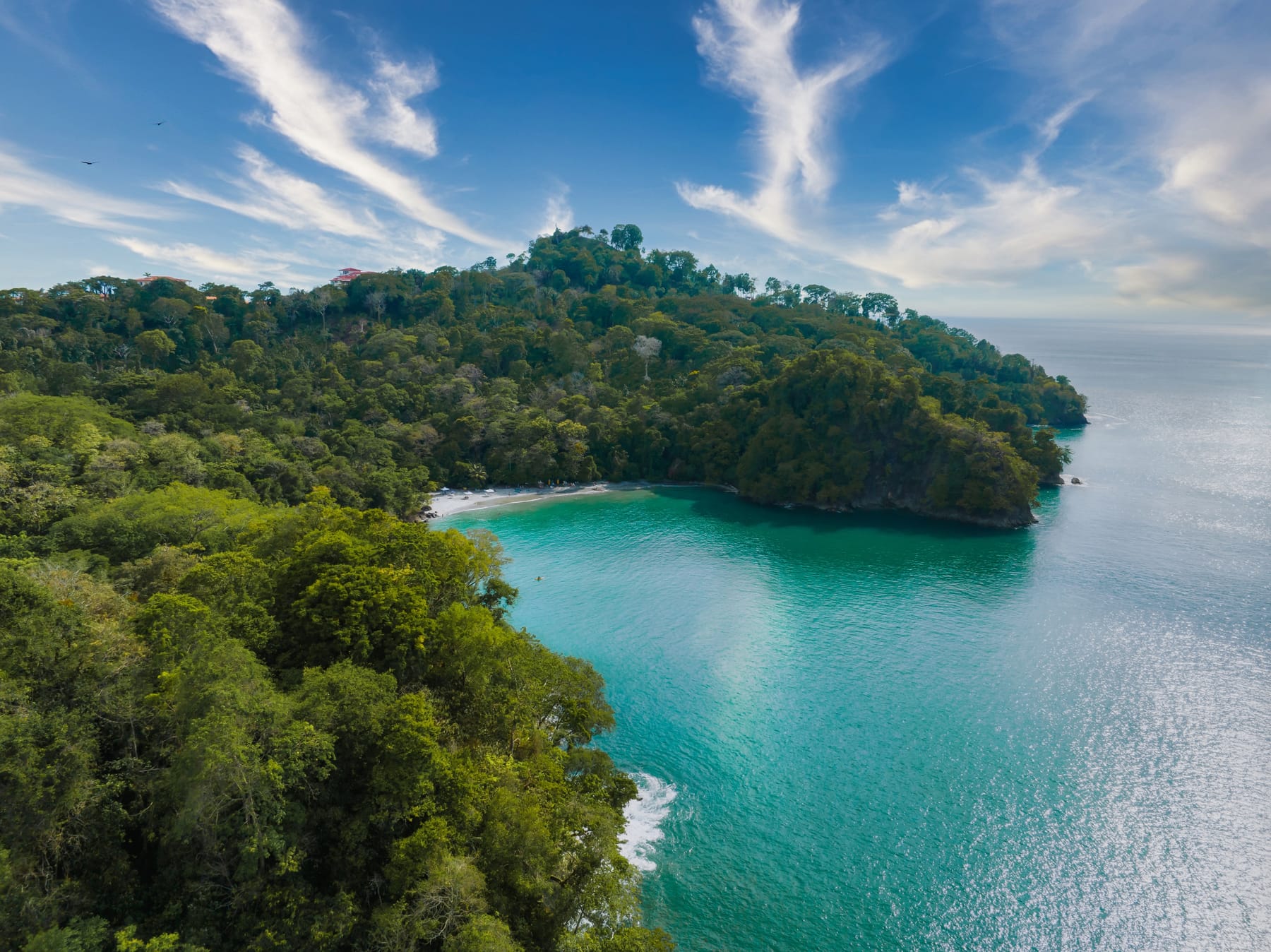
Parque Nacional Manuel Antonio, Costa Rica
There’s perhaps no better place on earth to spot a sloth that is entirely wild and free. Manuel Antonio National Park is located on the Pacific coast of Costa Rica and encompasses a gorgeous area of tropical rainforests and stunning, sandy beaches.
You’ll be offered a tour guide at the park entrance. My advice: take one, but not before haggling them down to about half the price they initially offered. The guides are insanely good at spotting sloths and mine essentially guaranteed that he’d serve one up to our group, which he happily did many times over. They set up a viewfinder that gives you an awesome up-close view of the animal and allows you to take professional level photos through the lens. If you want your sloths au naturale, look no further.
2. Jaguar Rescue Center, Puerto Viejo, Costa Rica
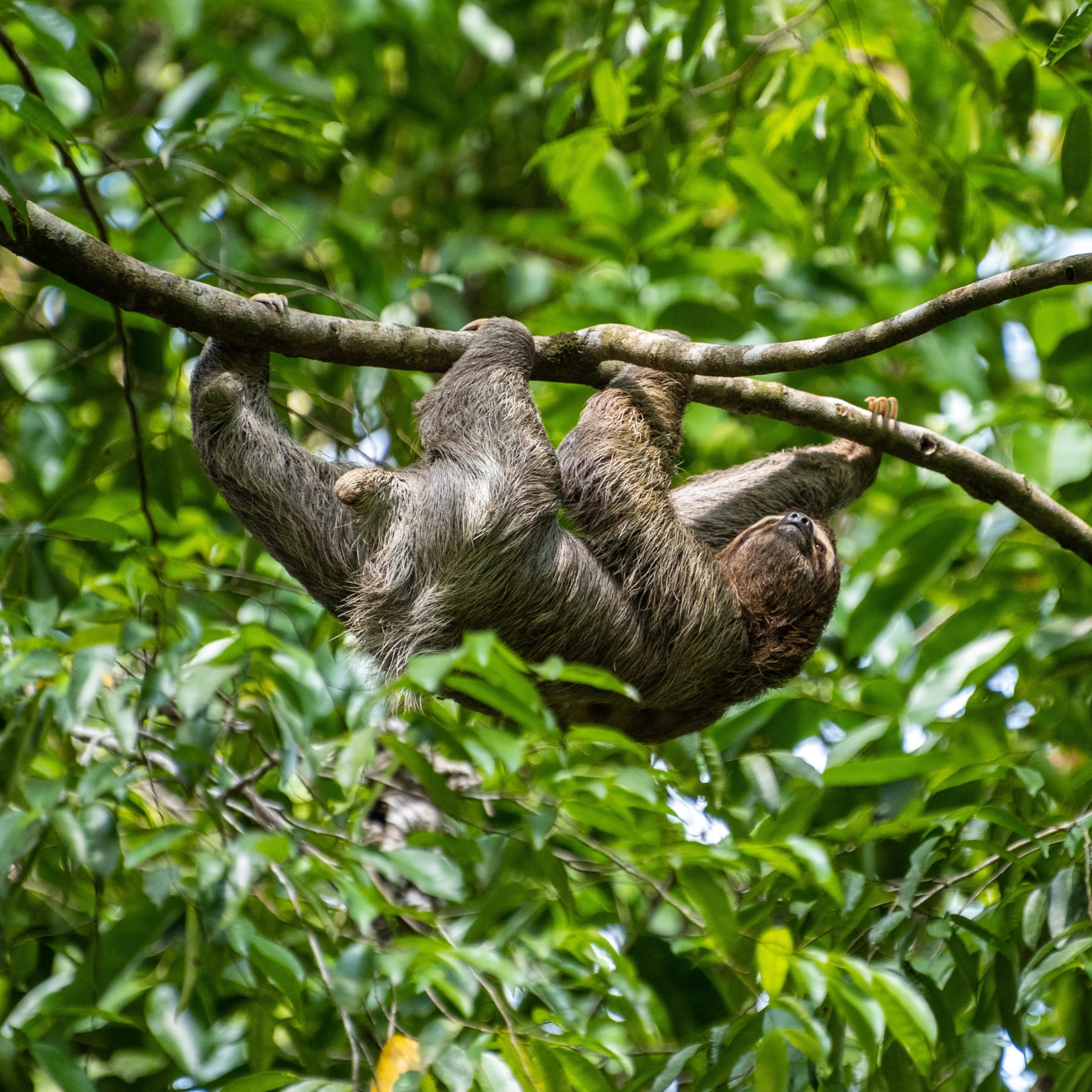
Jaguar Rescue Center, Puerto Viejo, Costa Rica
We shift now to the Atlantic coast of Costa Rica where an animal welfare organization is happily living up to its name. But don’t let the Jaguar Rescue Center fool you. While the rare big cat gets top billing, the stagnation* of sloths is perhaps the more popular attraction.
While tourists serve to fund the work of the center, it has a strong reputation for doing exactly what it says it does. 500-700 animals per year are nursed back to health, with 40% of them released after being deemed healthy enough to survive in the wild. The remaining number live out healthy and happy lives within the sanctuary where tourists can visit during the day, spend the night, or even stay on as a volunteer!
*Sloths are solitary animals and don’t really have a group noun, so I made that one up. Feel free to use it with your friends.
3. Parque Nacional Tortuguero, Costa Rica
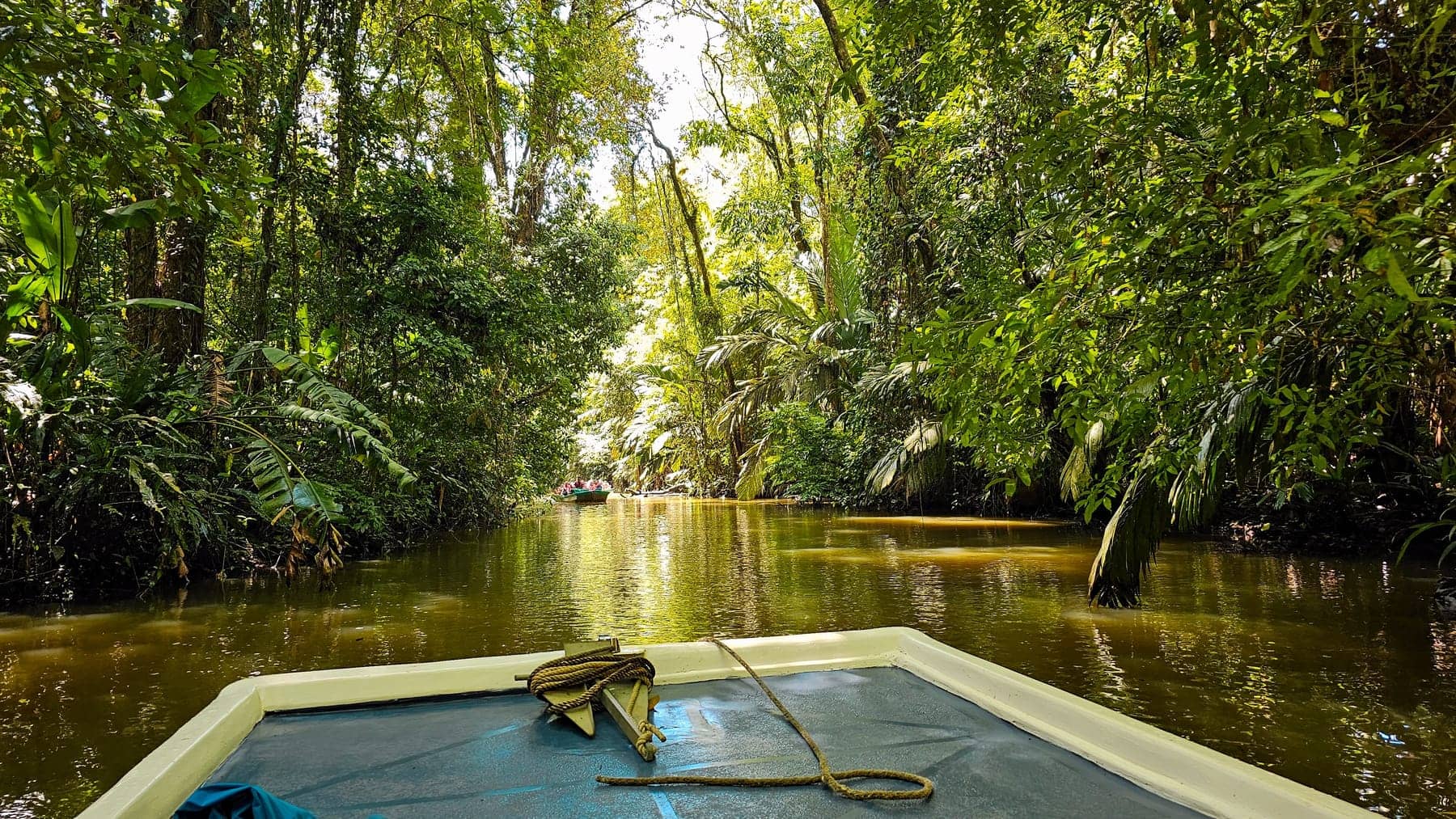
Parque Nacional Tortuguero, Costa Rica
As you’ve probably figured out by now, Costa Rica is the sloth spotting capital of the world. Unfortunately, this is in part due to the fact that the sloth’s habitat has been reduced from 40% of the country’s area to around 3% in the last 80 years, forcing the animals into ever more densely packed spaces.
That rather sad fact aside, Costa Rica does at least have firm controls in place for its remaining reserves. And along with Manuel Antonio, Tortuguero National Parkis perhaps the world’s most likely place to spot a sloth in the wild. Known more for its egg-laying sea turtles, the wildlife gets particularly thick (and easy to spot) along the palm-lined coast where you’ll also see toucans, monkeys, crocodiles, and manatees.
4. Fundacion Aiunau, Antioquia, Colombia
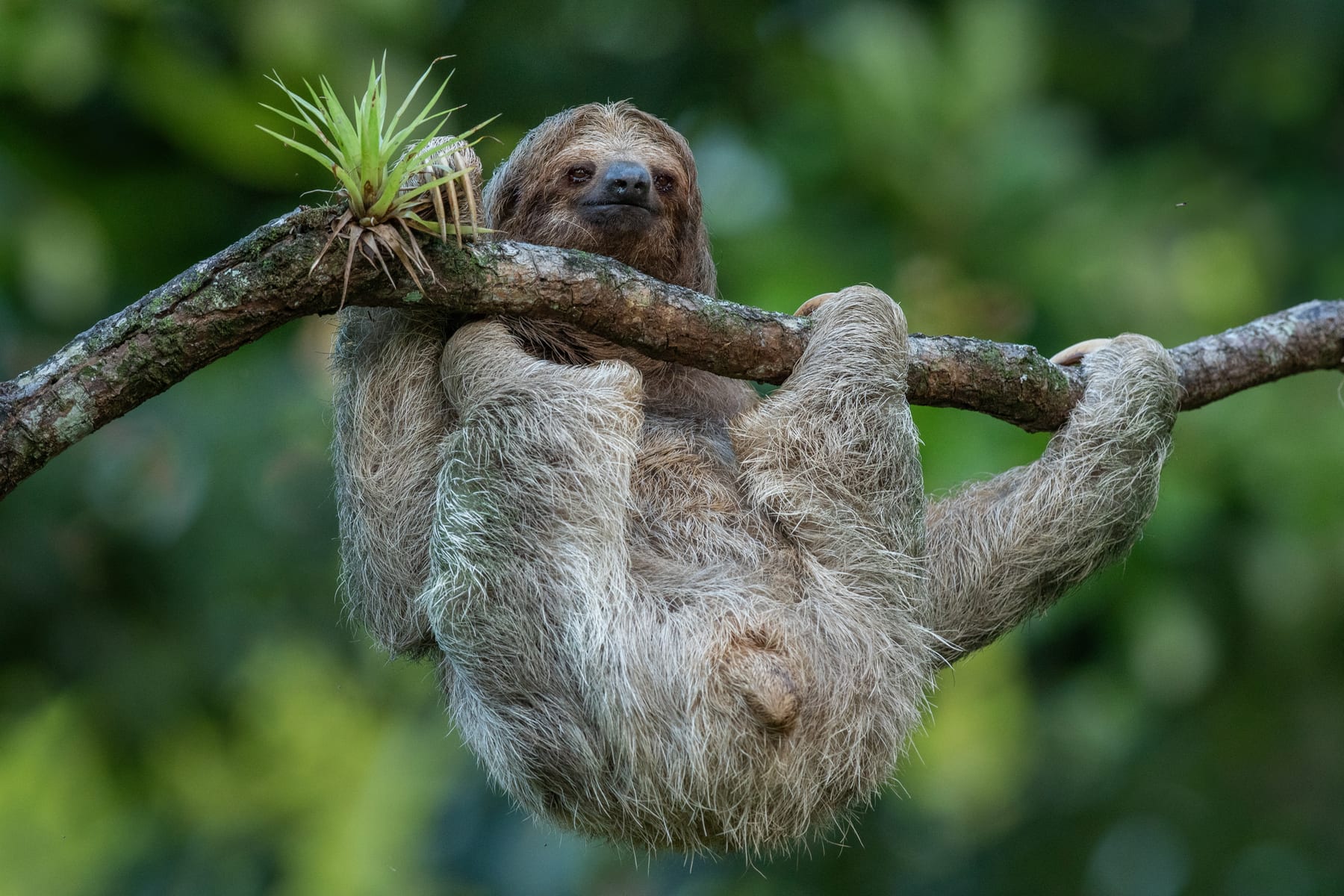
Fundacion Aiunau, Antioquia, Colombia
Unfortunately, the rise in the online popularity of sloths has been matched by a rise in their popularity with poachers – some of the poorer residents of the Americas hunt down sloths to sell on the roadside in an effort to turn a quick buck.
Enter Colombia’s Aiunau Foundation. A sign of a quality rehabilitation center is when they aren’t actually open to tourists, such is the commitment to their work. This is the case for Aiunau, which takes in injured and battle-weary sloths from the local area. And while tourists aren’t actively encouraged to visit, the foundation does sometimes accept special requests from truly concerned visitors who want to know more about the plight of the sloth. If you’re in Medellin, it’s definitely worth an email.
5. The Daniel Johnson Monkey & Sloth Hangout, Roatan, Honduras
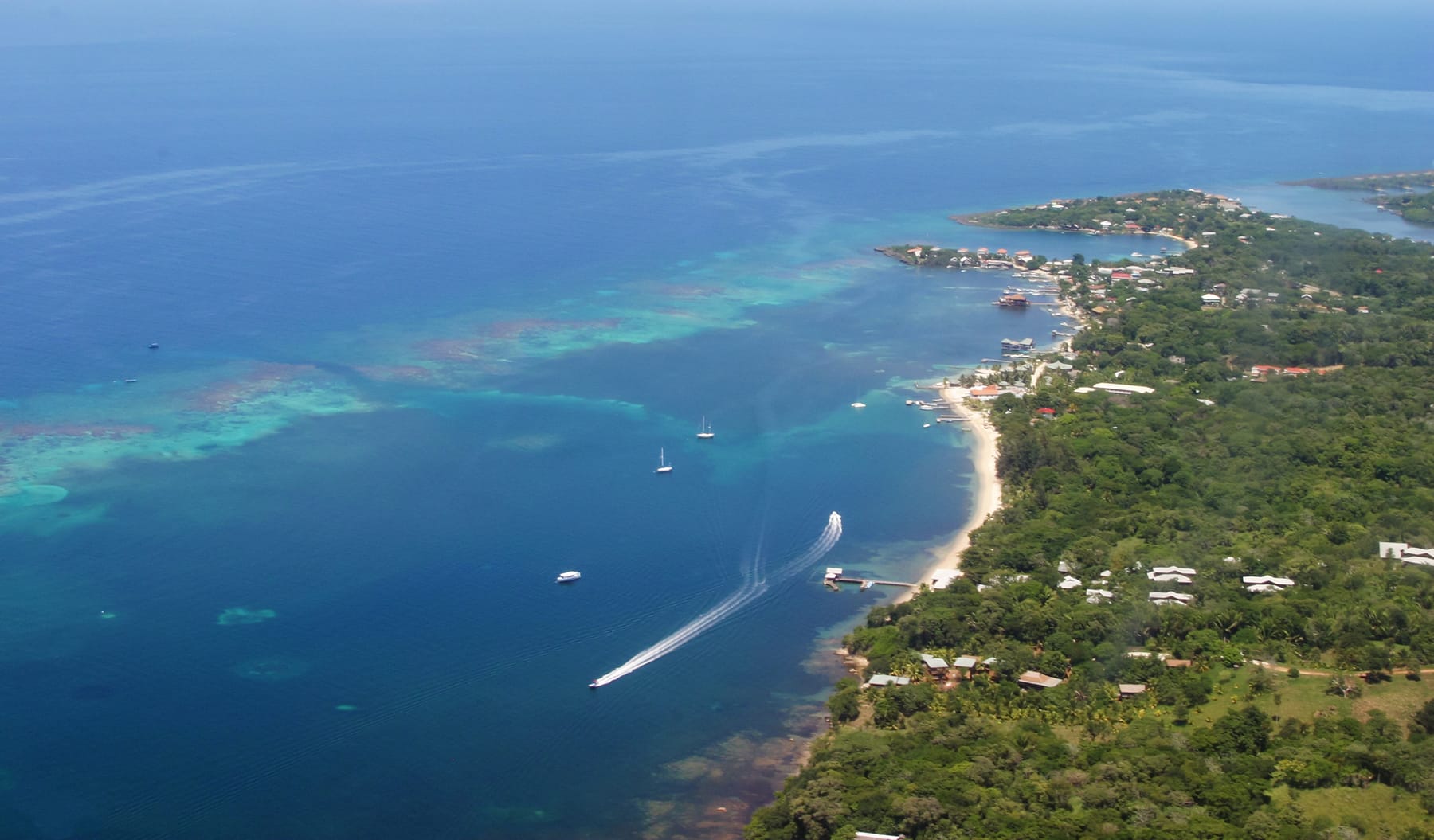
The Daniel Johnson Monkey & Sloth Hangout, Roatan, Honduras
This is undoubtedly the most touristy option on the list, but that doesn’t detract from the fact that Daniel Johnson and his family do important work in maintaining a safe and loving environment for animals in need.
Located on the Honduran Island of Roatan, the hangout is home to animals of all shapes and sizes, most of which have been handed to the Johnsons by locals who thought it would be a good idea to keep a wild pet before realizing it most definitely is not. The sanctuary covers a beautiful patch of land and sea that is home to a stunning array of wildlife, but the sloths are undoubtedly the star attraction. The money you pay is injected right back into the sanctuary, so you’ll be directly helping vulnerable animals simply by visiting!
6. Amazon Basin, Iquitos, Peru
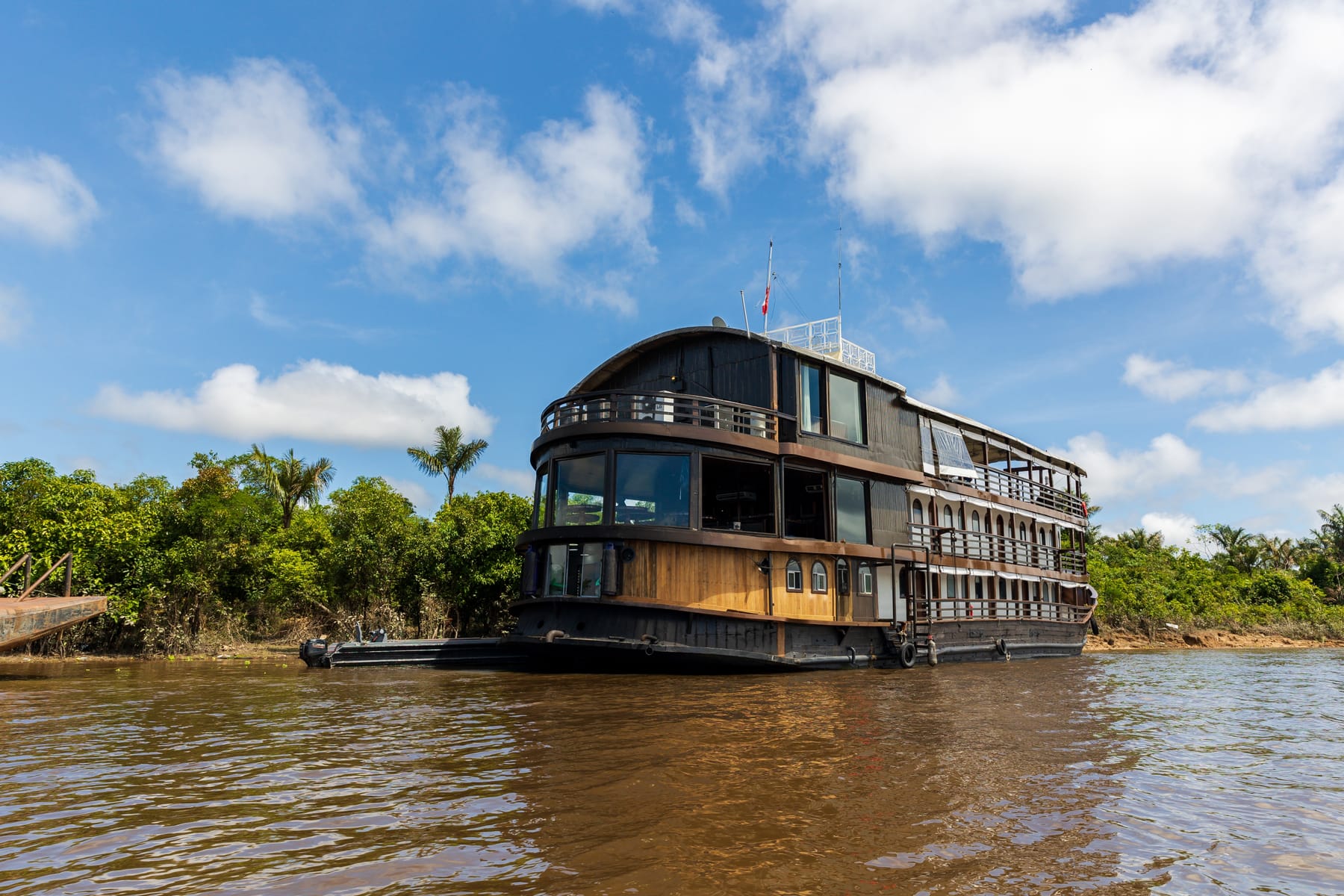
Amazon Basin, Iquitos, Peru
In 2015, I found myself in Iquitos, a Peruvian city in the Amazon Basin. I spent 4 days in the jungle, sleeping in a stilted building on a river and exploring the area by boat. Sloths were spotted, although they were inevitably blurry blobs hundreds of meters away.
On the last day of the trip my guide came to me with exciting news. Friends of his, local villagers, had a sloth living in their roof and she had given birth to a baby three days prior. “Would you like to see it?” he asked. “Oh my god are you dead set serious?!” was my cool, calm and collected response.
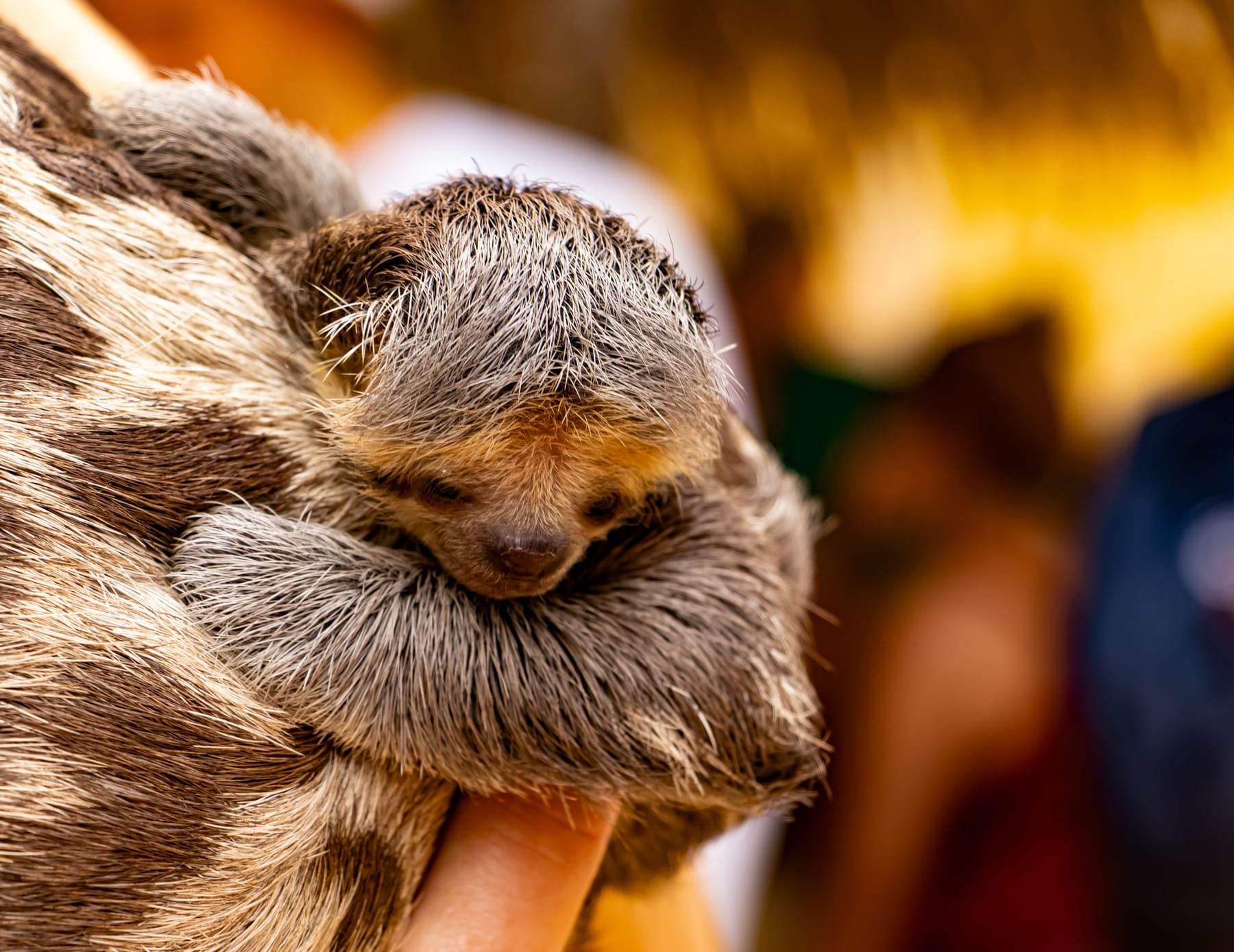
I came, I saw, I held a three day old baby sloth. Imagine the cutest thing you’ve ever seen… then add a bowl cut. The thing had me on the verge of tears for a full half hour. And while I was worried that it might be a dodgy situation, the family never asked for a cent from me, which was proof enough, to me at least, that a wild baby sloth just happened to be birthed in their roof thatching.
How to tell a good sanctuary from a bad one
Since the whole point of this list is not funding the wrong places, here is the short version of what separates them.
Ask what happens to the animals. A real rehabilitation center releases what it can and is specific about the percentage. A place that keeps everything, forever, and cannot tell you why, is a zoo with better marketing.
Watch for handling. If visitors are holding sloths, passing them around, or posing with them for photographs, that is not rehabilitation. A sloth being handled by strangers is a stressed sloth, and stress in sloths is easy to miss because they do not struggle. They freeze. Stillness is not consent.
Be suspicious of the word rescue. No law reserves it. A venue that bought its animals can still call itself a rescue, and many do.
The best ones often will not let you in. Aiunau, on this list, is closed to casual visitors, which is a mark in its favor rather than against it.
Our guide to choosing an ethical elephant sanctuary covers the same logic applied to a different animal, and most of it transfers.
Fame is a funny thing. Many want it, until they actually have it. Sloths didn’t set out to be Instagram influencers. Theirs was a fate sealed by teenage girls (and yours truly) sharing memes. They’re a victim of their own cuteness.
But by practicing ethical and responsible tourism you’ll be doing your bit to ensure fewer sloths end up caught in the human crossfire. Do your homework before you visit any rescue center, sanctuary, or even national park. The same reasoning applies anywhere else you go looking for wildlife. Give your money to those who actually help, rather than those who put on a façade of charity for personal gain.
Enjoy your sloth encounter, by all means. But do it in a way that will ensure the next generation will be able to enjoy one too.
If you would rather fund sloth rescue than travel to see one, the Sloth Sanctuary of Costa Rica and The Sloth Institute both appear in our directory of projects, and our guide to symbolic sloth adoption explains what those donations pay for.